star wars-projection mapping and holomesh

Simple Projection Mapping for Theme Parks and Museum Attractions

It is often assumed that video projection mapping in museums and theme parks requires large teams, expensive equipment, and high budgets. Our experience shows that this is not always the case. Between a high-cost show with heavy technical setups and a thoughtfully designed experience using minimal resources, the simpler option is often overlooked. Yet in many museum and theme park projects, it proves to be the more effective choice. Over the past few years, in Salso Design we have delivered projects that rely on minimal equipment and have been running permanently for years while remaining engaging for audiences. In this article, we take a closer look at what simple video projection mapping really means, where it can be used, how much it costs, and how it can be implemented in a permanent and professional way—without large technical teams or complex equipment. This content is intended for museum managers, theme park operators, and brands looking to create engaging experiences with limited budgets and small crews.

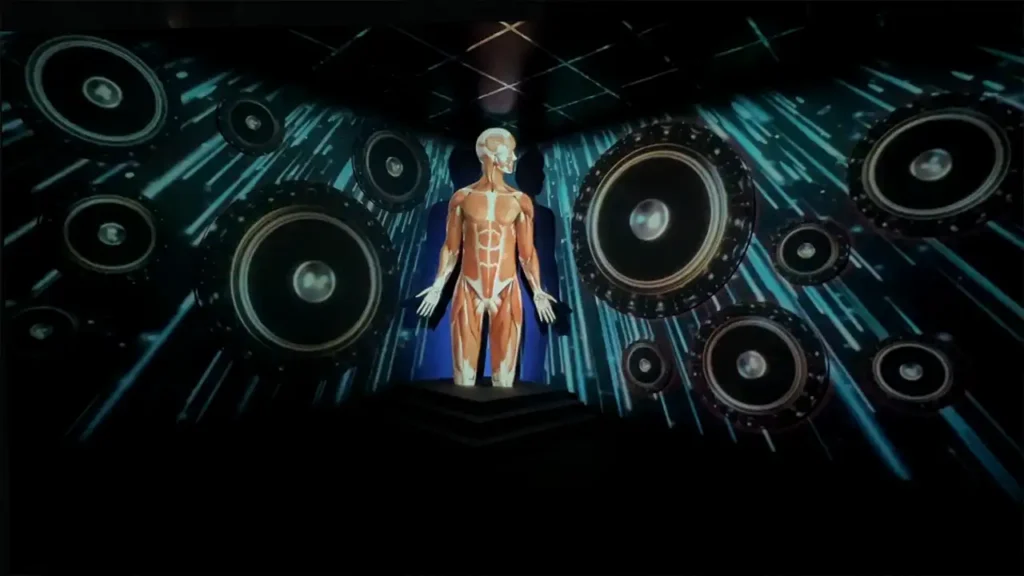
3D Projection Mapping in human park
Human bodies become the canvas — stories, light, and motion fused through 3D projection mapping.

Warning: Undefined array key "cc_load_policy" in /home/salsodes/public_html/wp-content/plugins/elementor/includes/widgets/video.php on line 1253

What qualifies as a simple projection mapping project?Is it defined by fewer projectors, simpler techniques, or smaller surfaces?

In practice, simple projects share a few key characteristics:

  • A maximum of one to three projectors
  • A single playback system
  • Limited and controllable projection surfaces
  • No reliance on cinematic rendering or heavy CGI
  • A clear focus on physical layout and storytelling rather than complex technology.

Simple video projection mapping uses a manageable number of projectors—ideally few enough to be controlled by a single computer. In most cases, this means no more than four projectors in one project. Content production also avoids complex, high-end workflows, allowing creativity to take priority over heavy production. Motion graphics, composited visuals, and even stock footage are often sufficient.

Even with a simple setup, compelling results are absolutely achievable. Thoughtful camera angles or the addition of physical elements such as sculptures or mirrors can significantly enhance the final experience.

Why is video projection mapping important?

It increases audience dwell time, costs less than many LED-based solutions, allows content updates without physically changing the space, and enables experiences that can be refreshed and repeated over time.

3D Projection Mapping lighting up Galaxy Park. where architecture meets imagination

Can simple mapping still be engaging, or does simplicity limit creativity?

Creativity is the defining factor. Projection mapping transforms ordinary, static spaces into visually engaging environments that capture attention. It can be applied across advertising, entertainment, and education. While large-scale projects often aim to create fully immersive environments by covering entire rooms or façades, smaller projects can be just as effective.

A photo frame can be animated, everyday objects can become projection surfaces, and the experience can be designed around the existing layout. In some cases, the space itself is designed specifically to support the projection concept.

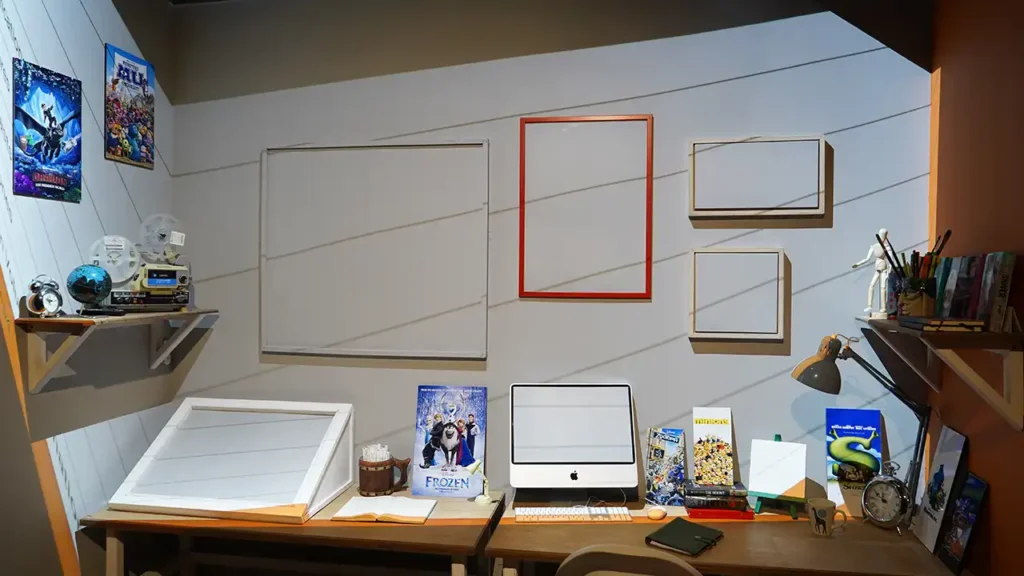
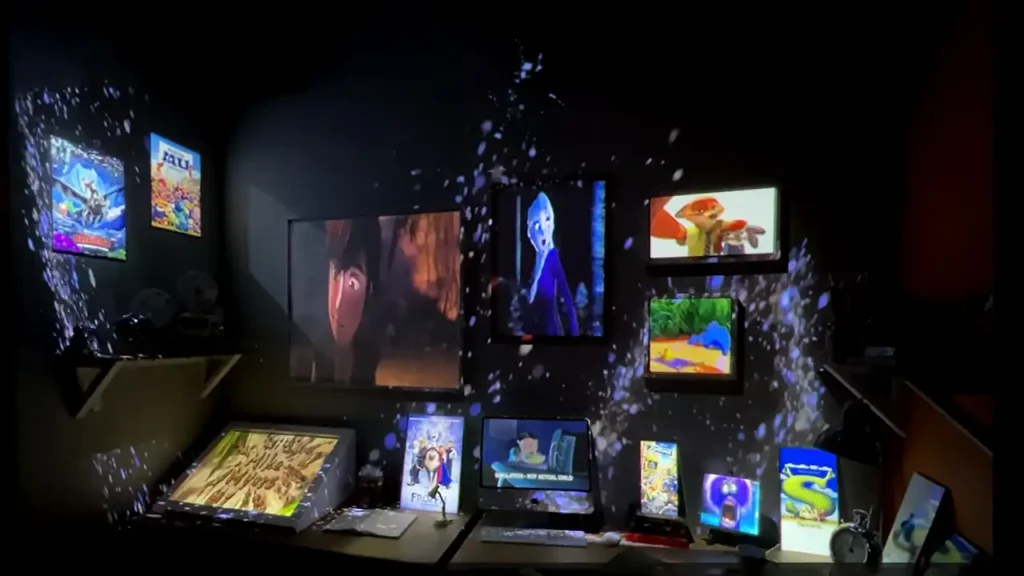
In our Animation Studio project, for example, we designed a small 10-square-meter room to resemble an animator’s workspace, fully aligned with the projection idea. Using a single projector with an integrated sound system and 4K support, we projected content onto two walls and a table. A simple but carefully engineered setup created an engaging experience for visitors.

A truly immersive creative hub. Utilizing Projection Mapping, this animator transforms their small studio into a dynamic, living canvas. Where animation leaps off the screen and into the real world

Is it possible to produce a high-quality project with a low budget?

Yes. By using simple, affordable hardware and focusing on strong visual design, it is possible to achieve high-quality results. Large-scale projects with high-end video content are expensive, which is why they often feature shorter or less frequent content updates. When budget and time constraints are removed, however, there are effectively no limits to duration or scale.

Simple video projection mapping can be used for storytelling, object animation, entertainment, gamification, and atmosphere creation. One application is enhancing existing artworks. A large octopus sculpture, for example, can be visually augmented through projection mapping, with the surrounding space designed to amplify its impact.

Projection mapping is also a powerful storytelling tool. In a short sequence of around two minutes, a simple line can evolve into a professional animation, showing its development step by step. Along the way, static photo frames may come to life, or a simple box may transform into a striking visual element.

Interactive experiences are another possibility. By using a camera to track audience movement, visuals can respond in real time to user behavior, creating a more engaging and participatory experience. Over the years, we have delivered several projects using this approach.
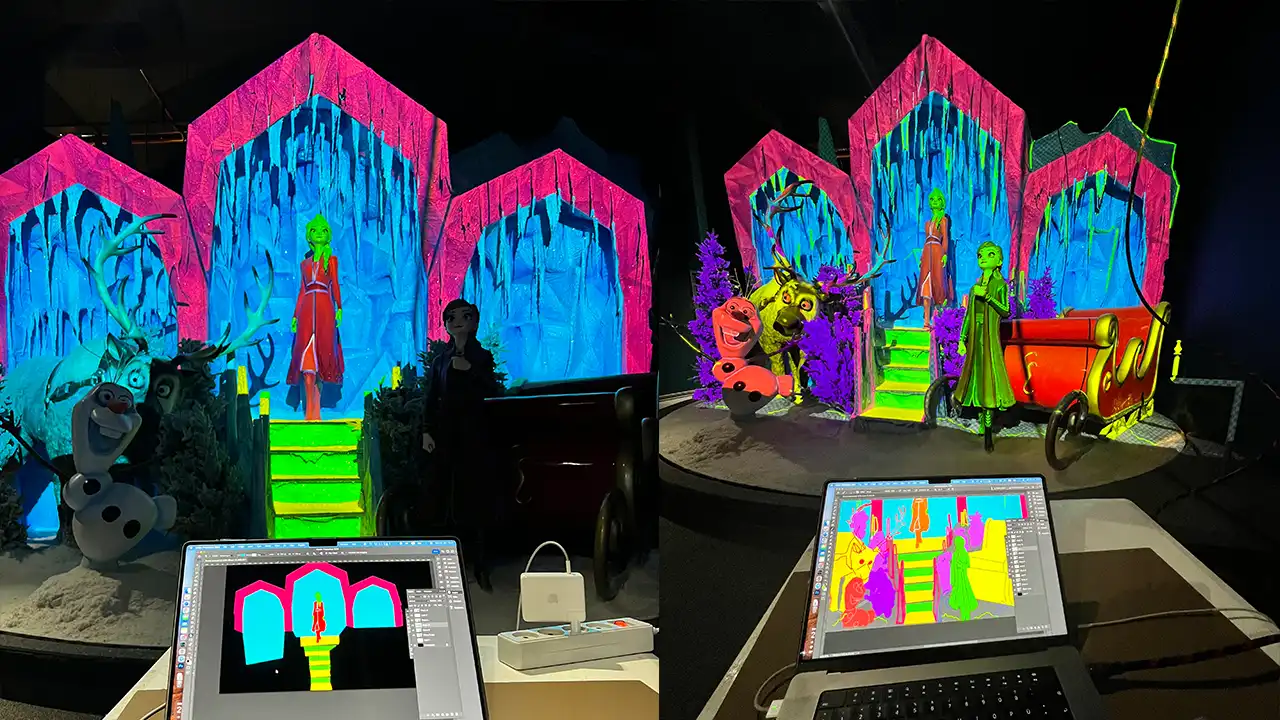
  • Animation Studio is a complete example of simple video mapping executed in a small room with a single projector and integrated sound. Although it was one of the lightest projects in terms of equipment, it was among the most complex in spatial coordination between décor and visuals. In terms of audience response and final output, it proved to be one of our most cost-effective projects.
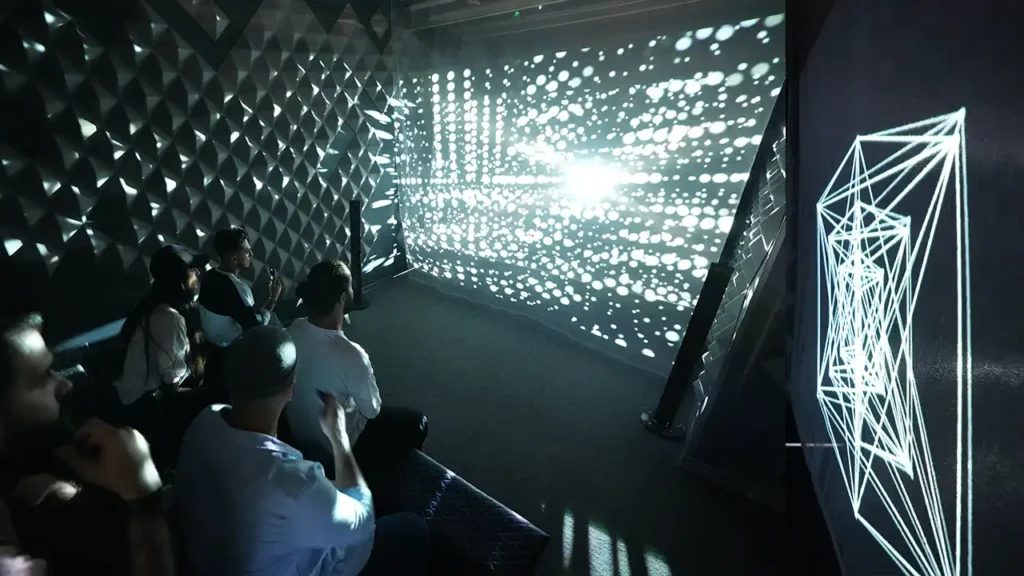
  • Galaxy Park Preshow also used a single projector, but with a different strategy. A mini-computer controlled motorized screens that opened and closed, allowing visuals to be projected onto semi-transparent surfaces. Multiple screen layers created an almost three-dimensional, hologram-like effect.
  • Human Park Preshow used three projectors controlled by a single computer within a relatively simple set. A surround sound system played a key role in turning a short presentation about the human body into an engaging experience. Two large walls and an anatomy-inspired stand were precisely synchronized with sound and visuals.
  • Jumanji Preshow was built with one projector and a simple playback system. Mirrors were used to display a very large image within a small space, while strong physical décor enhanced the atmosphere and supported the projection.
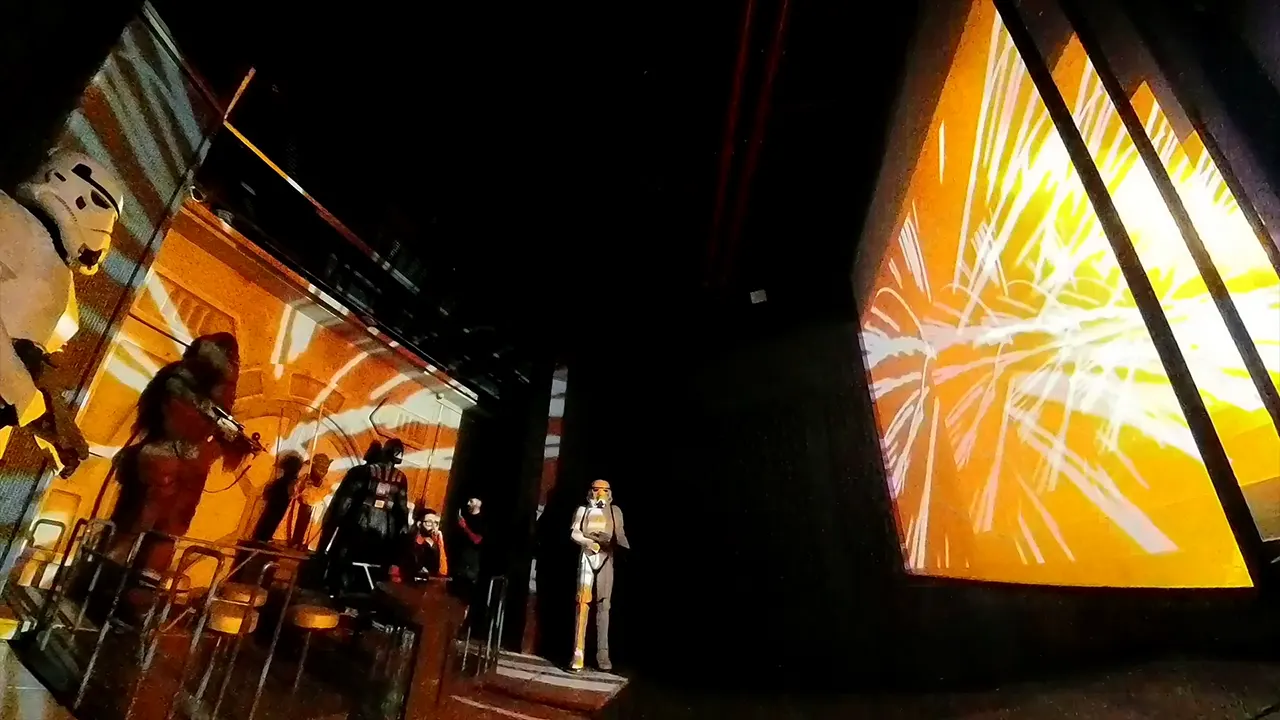
  • Star Wars Preshow demonstrated how a single projector can deliver two distinct experiences. With one computer, one projector, and thoughtful set design, visitors experienced two different techniques simply by changing their viewing position. One approach used back projection across multiple surfaces, while the other focused on projection mapping onto sculptures and physical forms.

Warning: Undefined array key "cc_load_policy" in /home/salsodes/public_html/wp-content/plugins/elementor/includes/widgets/video.php on line 1253

How much does a project like this cost?

There is no fixed price, as every project is different. Costs generally fall into three categories: specialized equipment such as projectors, playback systems, and audio; set design and auxiliary elements, whether static or dynamic; and content production, ranging from simple graphic videos to full-scale productions. As project scale and quality increase, so does the required effort across all three areas.

For a standard professional setup, the minimum cost typically starts at around USD 5,000. These projects usually include physical décor, with most of the budget allocated to video production, projectors, and sound systems. There is no upper limit—scope and cost can scale freely depending on requirements.

Are these projects temporary or permanent?

While many projection mapping artists focus on temporary installations, most of our projects are designed as permanent experiences capable of running for many years. Over time, they require only content updates to stay fresh. We also design projects for exhibitions and temporary spaces when needed.

What spaces are they suitable for?

Suitable spaces include:

  • theme parks
  • museums
  • showrooms
  • advertising campaigns
  • product launches

Warning: Undefined array key "cc_load_policy" in /home/salsodes/public_html/wp-content/plugins/elementor/includes/widgets/video.php on line 1253

What are the steps involved in implementing a video projection mapping project and how long does it take?

Project execution typically begins by defining the concept, function, and budget. From there, budgets for hardware, set design, and content are determined. Scriptwriting and spatial design follow, shaping the audience experience and narrative. Hardware is specified and prepared, then set construction and content production begin. If the set is built to precise dimensions, content can be developed in parallel. Otherwise, the set is completed first, followed by scanning and content adaptation. After testing, issues are resolved before final deployment. Simple projects without complex sets or advanced displays usually take four to six weeks to complete.

What tricks can be used to improve the output quality?

Output quality depends on hardware, content, and execution. In some cases, high-contrast projectors significantly improve results. In others, precise projector placement matters more than premium hardware. Strong storytelling can often compensate for technical limitations and keep audiences engaged.

3D Projection Mapping in human park

What is the advantage of using a mapping video projector over an LED?

Compared to LED displays, projection mapping offers greater flexibility. LED content is confined to the physical screen, while projectors can map visuals onto almost any surface, including sculptures. LED displays can still be used as complementary elements, creating effective hybrid solutions.

Can I get advice from you to carry out a video projection mapping project and implement it with local teams?

If you are considering a projection mapping project and want to know whether this approach suits your space, we can review it together in an online consultation. For simpler projects, remote collaboration is often sufficient. For more complex installations, at least one team member may need to be present on site. When on-site presence is not possible, we coordinate with local teams to ensure accurate execution.

Bring Any Space to Life with Projection Mapping

Contact us today and let’s design a plan

FAQ

  • 1. How much does a simple projection mapping project cost?

    A standard professional project typically starts at around USD 5,000. The final cost depends on equipment, set design, and content production. There is no upper limit—the scope can scale based on project goals.

  • 2. Can simple projection mapping be used for permanent installations?

    Yes. Many simple projection mapping projects are designed as permanent installations and can run for years. They usually require only periodic content updates to remain engaging.

  • 3. How many projectors are needed for a simple setup?

    Most simple projects use one to three projectors controlled by a single computer. This keeps the system reliable and easy to manage while still delivering strong visual impact.

  • 4. Is projection mapping better than LED displays?

    Projection mapping offers greater flexibility, as visuals can be projected onto almost any surface, including objects and sculptures. LED displays are limited to fixed screens but can be used alongside projection for hybrid solutions.

  • 5. Can projects be executed with local teams?

    Yes. For straightforward projects, remote consulting and coordination with local teams is often enough. For more complex installations, on-site supervision may be required to ensure accurate calibration and execution.

  • 6. Can simple projection mapping be used for permanent installations?

    Yes. Many simple projection mapping projects are designed as permanent installations and can run for years. They usually require only periodic content updates to remain engaging.

Leave a Reply